

Sometimes, diplomacy starts with what’s on the table. Across Manila this month, American agricultural products are being positioned through restaurant menus, supermarket aisles, and curated food experiences designed to reinforce a familiar idea: that the United States remains a key partner in how Filipinos source, consume, and experience food.
At first glance, the Galing USA campaign reads like a lifestyle initiative. Ten restaurants offering dishes built around US ingredients. Retail promotions featuring American meat, cheese, and produce. A tote bag for diners who spend enough. Look closer, and the strategy becomes clearer: This is market positioning.
And at the center of it is the visit of Michelle Bekkering, Deputy Under Secretary for Trade and Foreign Agricultural Affairs at the United States Department of Agriculture. Her presence in Manila signals that these are not isolated promotions, but part of a broader push to deepen the United States’ agricultural footprint in the Philippines.
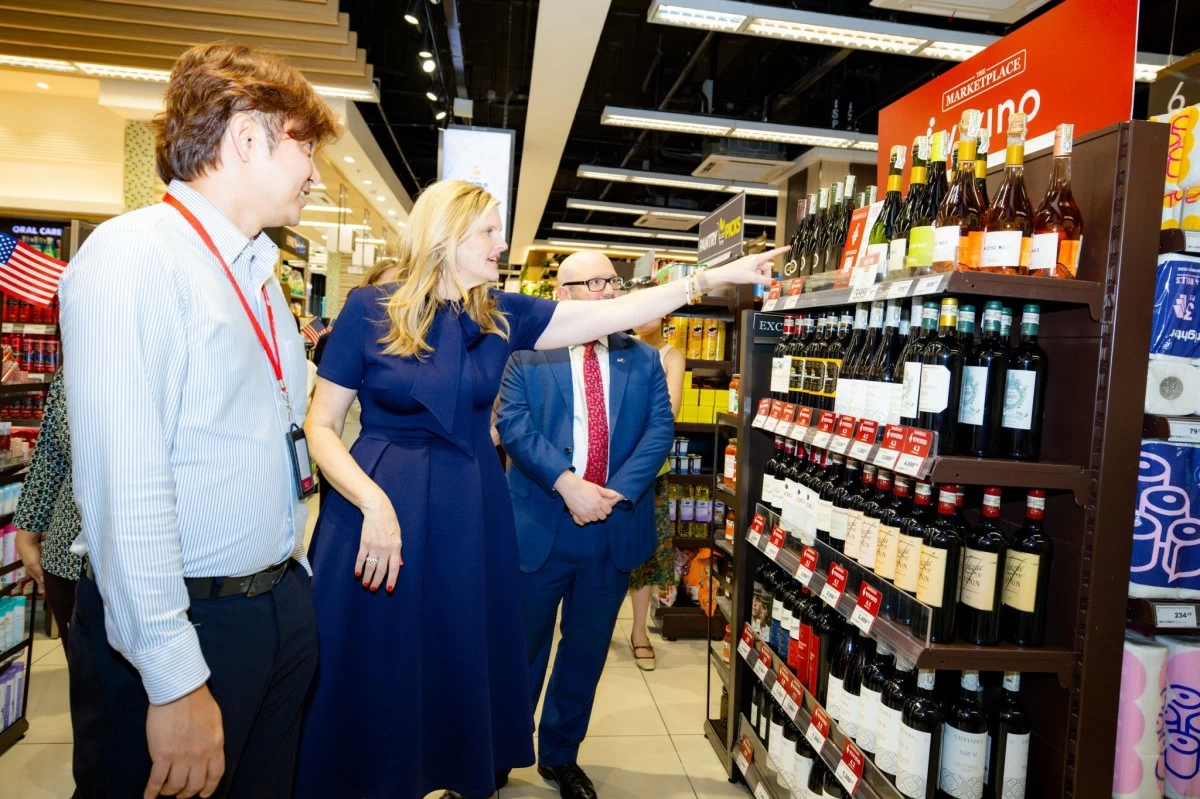
USDA Under Secretary Michelle Bekkering together with Agricultural Counselor Michael Ward inspect US food and drink products at a local supermarket.
The Philippines is already a significant market. It ranks as the tenth largest for US agricultural and food exports globally, with an average of $3.4 billion in annual exports over the past five years. Within Southeast Asia, it stands as the largest market for US consumer-oriented agricultural products, reaching $1.3 billion in 2025.
Those figures do not happen by chance. They are built through sustained engagement—across government, industry, and consumer spaces. Bekkering’s visit reflected that layered approach. Beyond launching American Restaurant Month, she met with key stakeholders across the supply chain, from retailers and food producers to policymakers. The message was consistent: US agriculture is not just about exports, but about integration into local systems which is already visible.
From wheat used by Filipino millers and bakers, to ethanol supporting the country’s energy mix, to premium beef and dairy products finding their way into both high-end dining and everyday consumption, American agricultural products have positioned themselves across multiple segments of the Philippine market.
Recent developments reinforce that trajectory.
A partnership with local wheat millers highlighted the continued use of US wheat, marked by the American Wheat Quality Seal. In the energy sector, discussions around ethanol and sustainable aviation fuel point to an expanding role beyond food. US ethanol exports to the Philippines reached a record $191.1 million in 2025, underscoring the scale of that engagement.
This goes beyond food as agriculture now sits alongside trade, energy, and food security—and the US continues to position itself across all of them.
Which brings the strategy back to something more familiar: the dining table.
Restaurant collaborations under American Restaurant Month serve a clear purpose. They make agricultural trade tangible, putting the product directly in front of the consumer. It builds familiarity. And recognition matters. Consumers shape demand. Demand shapes markets. Markets, in turn, influence trade flows.
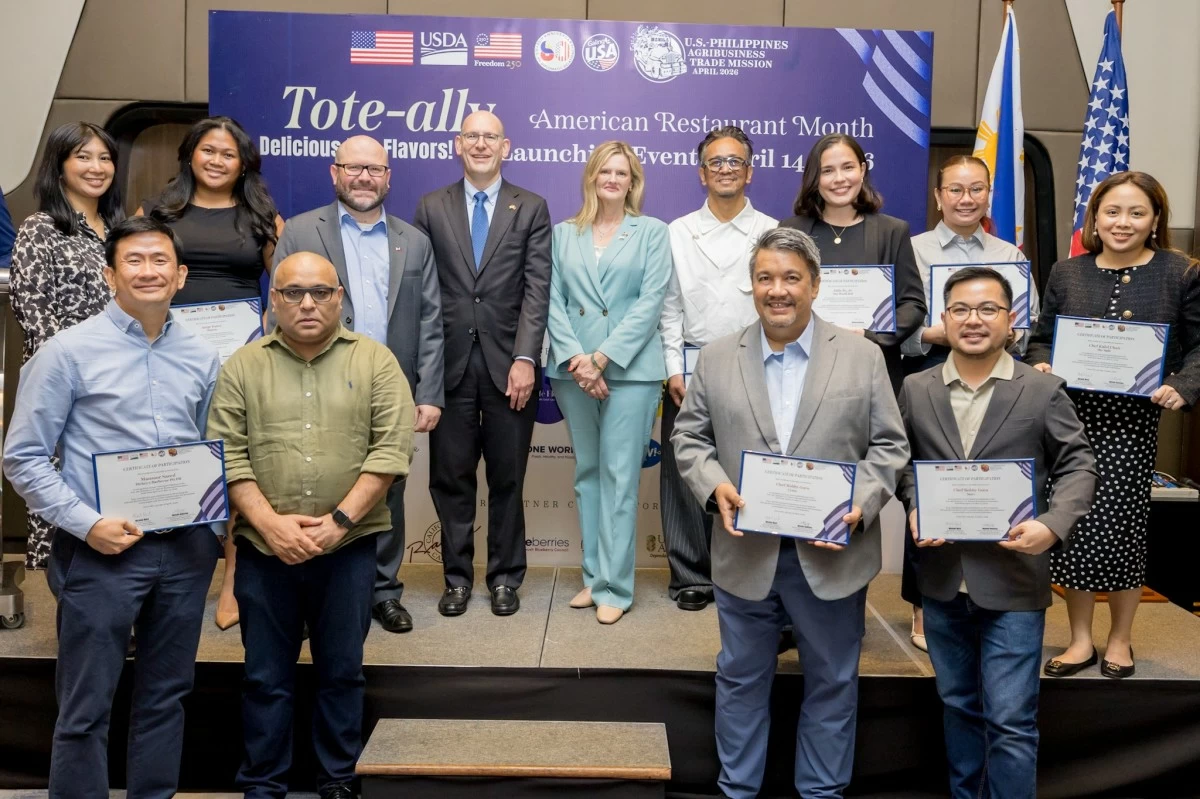
US Department of Agriculture Under Secretary Michelle Bekkering (center), Chargé d’Affaires, a.i., Y. Robert Ewing (fourth from left), and Agricultural Counselor Michael Ward (third from left) join partner restaurant representatives at the American Restaurant Month launch on April 14 in Manila.
Until May 13, participating restaurants—including 25 Seeds, Bizu Patisserie and Café, Café Fleur, Cyma, Dickey’s Barbeque Pit, Farmer’s Table, Mamou, One World Deli, Souv, and The Split—are offering dishes built around U.S. ingredients, from USDA ribeye steaks and duck confit to selections of American cheeses. A minimum single-receipt purchase of P3,000 comes with a USDA tote bag as part of the promotion.
Retail partnerships with The Marketplace and Metro Supermarket extend that experience further, bringing American products directly into Filipino households. Tastings, in-store promotions, and curated displays reinforce the same message in a different setting.
The approach is deliberate. It moves from high-end dining to retail, from policy to everyday consumption, creating multiple entry points into the market.
At the same time, the United States is reinforcing relationships on the institutional side. During the visit, eight Filipino organizations were recognized for their role in advancing agricultural trade and food security—partners that, collectively, represent decades of engagement between the two countries.
This dual approach—top-down and bottom-up—is what gives the strategy weight. It engages policymakers, supports industry, and reaches consumers, all within the same framework.
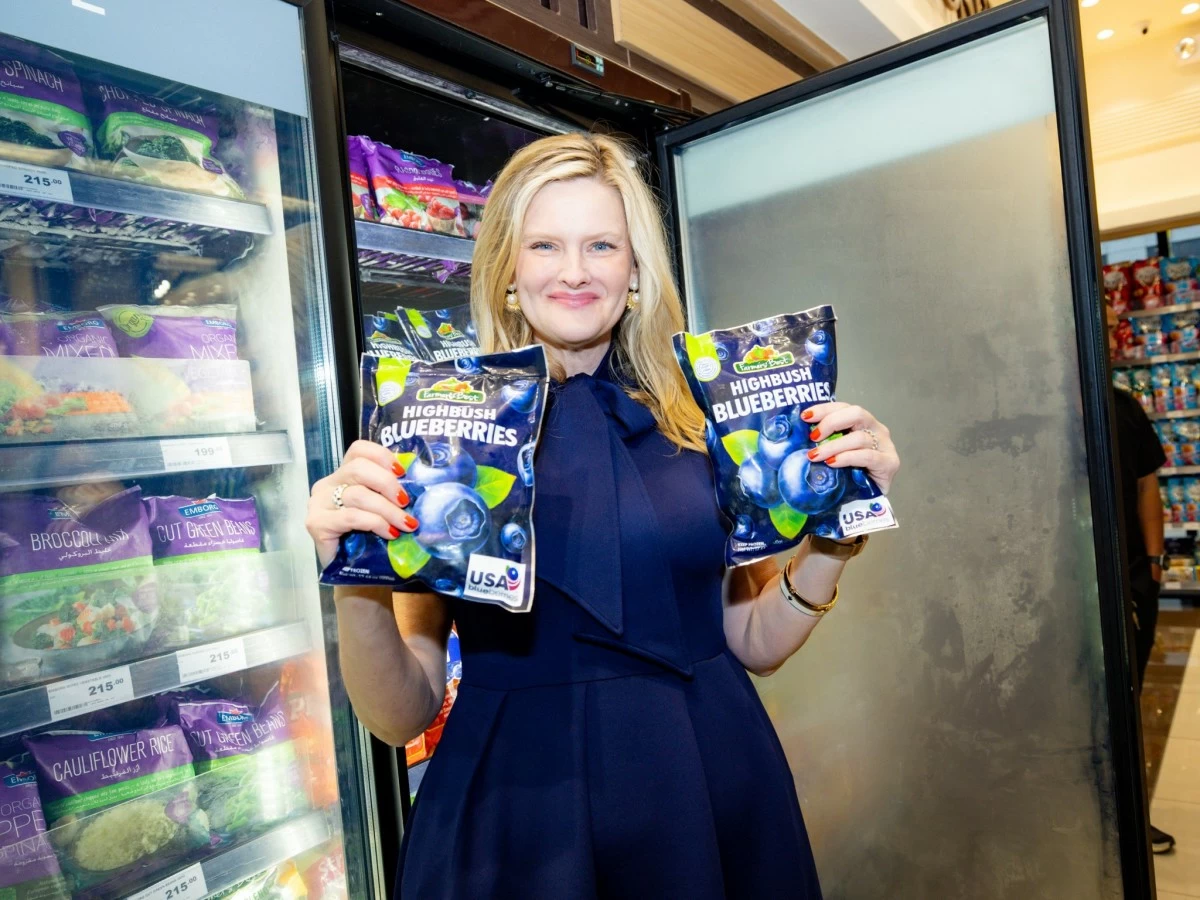
USDA Undersecretary Michelle Bekkering shows American blueberries being sold in local supermarkets in the Philippines.
In the context of the 80th anniversary of US-Philippine diplomatic relations, these efforts take on added significance. Agriculture has long been a cornerstone of that relationship, but the current push suggests a more intentional expansion. One that aligns trade with visibility, and policy with everyday experience.
For the United States, the objective is clear: to remain a dominant and trusted supplier in a competitive global market. For the Philippines, the partnership offers access to a steady supply of agricultural products, as well as collaboration in areas tied to food security, energy, and industry.
It all feeds into the same objective. And sometimes, it begins with a meal.