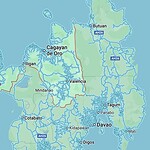

TEOFILO Padel, 59, says fishing has become increasingly difficult because of illegal fishing and growing competition from large boats engaged in commercial fishing.
“Sometimes we come home with nothing, and even if we do, it’s just enough for a day or two’s worth of expenses, or sometimes not even enough to pay off our debts,” said Padel, a family man with three children from Balangiga town in Eastern Samar in the Catholic-majority Philippines.
“It’s hard because the cost of fishing gear is high, and the price of fish is low,” he added.
If big fishing companies enter their fishing grounds, Padel said conditions will become even harder because those areas are where small fishermen rely on their daily catch.
“It is our only source of livelihood. We won’t be able to survive, and we’ll worry because we won’t be able to earn back our capital,” Padel said.
“I love the sea. It is my daily life. If I lose it, I lose my livelihood,” he added.
As illegal fishing and the entry of large fishing companies continue to threaten the livelihoods of poor Filipino fishermen, Padel called on the government to intervene.
“The government should not allow this kind of policy because small fishermen really suffer. These large fishing companies leave almost no fish behind,” said another fisherman, Jose Barcil, 55, of General MacArthur town in Eastern Samar.
Because of the southwest monsoon, locally known as habagat, small boats are often unable to go out to sea.
“And when we are able to fish, if we catch anything at all, it’s just enough to sell a small amount. But most of the time, there’s no catch at all,” said Barcil, a father of four.
Asked whether he had considered engaging in illegal fishing to increase his catch, Barcil admitted the thought had crossed his mind.
“But we’re afraid of getting caught. That’s why the big-time fishermen, who are the ones usually doing illegal activities, should be the ones arrested. But instead, they are the ones being protected by the government,” Barcil said.
A report from the Police Regional Office in Eastern Visayas, which covers six provinces including Eastern Samar, showed that authorities intercepted 40 illegal fishing activities in the region from January to July 15, 2025, alone.
Eastern Visayas police reiterated their firm resolve to enforce fisheries laws to ensure the long-term sustainability of marine resources.
Meanwhile, Oceana Philippines, a nonprofit ocean conservation organization, earlier said the country “is grappling with a mounting crisis in its fisheries sector as illegal, unreported, and unregulated fishing continues to surge, undermining the livelihoods of small-scale fishers and threatening national food security.”
The statement came amid the Supreme Court First Division’s December 2024 ruling allowing commercial fishing vessels to operate within the 15-kilometer municipal fishing zone, affecting more than two million artisanal fisherfolk.
Using satellite-based VIIRS (Visible Infrared Imaging Radiometer Suite) technology, Oceana’s recent data revealed “a sharp increase in suspected illegal activity.”
“Year-on-year analysis shows a steady upward trend, with VIIRS Boat Detections (VBDs) rising by 9 percent from 26,295 in 2022 to 28,822 in 2023 and further increasing by 10.5 percent to 31,843 in 2024,” the group said in its July 2025 report.
“Over the past two decades, fisheries production data from the Philippine Statistics Authority show a consistent decline in catch volumes of top species, signaling increasing pressure on fishery resources. Bali sardinella (tamban) peaked in 2010 at over 334,000 metric tons, but went downhill to only around 253,000 in 2024,” the group added.
In February 2025, some 48 prelates, including Catholic charity Caritas Philippines, signed a manifesto supporting small fishers and calling on the national government to affirm the preferential rights of artisanal, small-scale fisherfolk in municipal waters.
The prelates said the integrity of creation is threatened, while the lives and survival of artisanal and municipal fishermen are challenged by the court ruling.
Despite the hardships brought by continued illegal fishing, Barcil said he still pins his hopes on his children.
“I want to pass this on to my children, especially my eldest who wants to continue it. Whatever the future brings, it’s up to them if they still want this as their livelihood,” Barcil said in Filipino. (Ronald O. Reyes/SunStar Philippines)