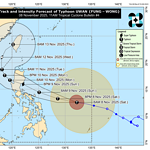

Typhoon Tino has left a trail of destruction across Central Visayas and parts of Mindanao, killing at least 204 people and forcing over 400,000 residents to flee their homes due to storm surges, flash floods, and violent winds. A month’s rainfall fell on Cebu in just hours, with the city recording the most number of deaths at 144, followed by Liloan with 36 and Compostela at 31 deaths. Cebu Provincial Governor Pamela Baricuatro has placed the entire province under a State of Calamity, citing severe damage to infrastructure, government facilities, private establishments, and residential areas. The province is still reeling from a magnitude 6.9 earthquake that struck its northern municipalities last September 29, leaving 79 dead. Relief and recovery operations are currently underway, with Public Works Secretary Vince Dizon mobilizing units to clear roads and rivers from debris. Power distributor Visayan Electric Co aims to restore 80 percent of power in the province by mid-November. In Caraga region, over 43,000 families were affected by severe floods, with 14 fatalities recorded in Dinagat. The destruction in Dinagat has been described as “eerily similar” to Super Typhoon Odette in December 2021. Agriculture damage has been estimated at ₱1.3 billion, with 17 major road sections in Visayas and Mindanao remaining impassable due to landslides and flooding. The Visayas is now bracing for another incoming super typhoon named Uwan, which is expected to hit the region over the weekend and also affect Luzon.