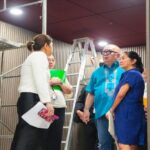

MANILA (MindaNews / 5 Sept) — “Mas madali pa ang umilag-ilag sa mga bala ng gyera sa aming lugar kaysa magsalita dito sa forum (It seems far easier to dodge bullets in the armed skirmishes in our village than to talk in this forum),” said Marvin Mudjahirin, barangay captain of Pansul, Patikul in the Province of Sulu. Mudjahirin is one of the 10 barangay captains who traveled from the hinterlands of Patikul to present their village reconstruction projects during the Balik-barangay Peace Investment Forum held at Bayview Park Hotel in Manila on Wednesday. The event, organized by the Bridging Leaders Associates (BLA) and supported by the UNDP-Programme on Stabilization, Peacebuilding, and Resilience in the Bangsamoro (PROSPER), also saw ten more community leaders from Patikul highlighting the urgent needs of their war-torn communities and seeking support for the rehabilitation of their barangays. For over three decades, Patikul was a flashpoint of conflict between the Armed Forces of the Philippines and the Abu Sayyaf Group (ASG), displacing thousands and leaving trauma. With Sulu now declared free from ASG presence, over 5,000 individuals have returned, but challenges persist. Dr. Selva Ramachandran, UNDP Resident Representative, emphasized the importance of inclusive recovery during his virtual message at the forum. The barangay leaders outlined issues like trauma, disrupted education, lack of basic services, and governance gaps. Ryan Hayudini, barangay captain of Latih, stressed the need for partnership, stating, “We are not here to ask for charity; we are here to ask for partnership.” Matthew Boyall of the Australian Embassy reaffirmed Australia’s commitment to Mindanao’s stability. Jainab Alfad of BLA detailed a rehabilitation plan anchored on six pillars: basic services, livelihoods, peacebuilding, and more. She emphasized the sacrifices needed to build peace, stating, “Our generation needs to do that sacrifice.” The leaders’ message was clear: investing in Patikul is a strategic move for national stability, as its recovery can foster regional development within the Brunei-Indonesia-Malaysia-Philippines East ASEAN Growth Area (BIMP-EAGA). Their journey to Manila followed the signing of a Recovery Charter for Post-Conflict Barangays, a community-driven framework for rebuilding lives and sustaining peace. (Jules L. Benitez / MindaNews)