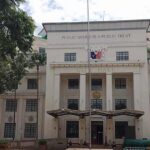

The Philippines will host two of the world’s top diplomats next week as United States Secretary of State Marco Rubio and Chinese Foreign Minister Wang Yi join a series of Association of Southeast Asian Nations (ASEAN) meetings in Manila expected to tackle regional security, economic cooperation, and geopolitical challenges across the Indo-Pacific.
Department of Foreign Affairs (DFA) Spokesperson on ASEAN Matters Dominic Xavier Imperial confirmed in a press briefing on Thursday, July 16, that Rubio and Wang will attend next week’s meetings, although he said it will be up to each foreign minister to decide which specific ministerial sessions they will join.
Their participation comes as Washington and Beijing continue to compete for influence across Southeast Asia amid disputes over the South China Sea, Taiwan, trade, and regional security, with ASEAN serving as one of the few multilateral platforms where both powers regularly engage each other and regional partners.
Last year’s ASEAN ministerial meetings also provided the venue for the first face-to-face meeting between Rubio and Wang since Rubio assumed office, highlighting the bloc’s role as an important channel for dialogue between the world’s two largest economies despite persistent strategic rivalry.
Imperial said the presence of ASEAN’s dialogue partners demonstrates their continued commitment to engaging the regional bloc.
ASEAN prioritizes cooperation
Asked whether tensions between China and Japan could affect next week’s meetings, Imperial said ASEAN remains focused on areas of cooperation rather than bilateral disagreements among its dialogue partners.
“Everyone is committed to coming here in Manila and sitting with ASEAN and discussing way forward or where we can cooperate,” he said.
He said ASEAN’s dialogue mechanisms, including the ASEAN Plus Three, ASEAN Regional Forum, and East Asia Summit, were designed to bring countries together to discuss issues of mutual benefit.
Imperial added that differences between individual countries are being managed through bilateral channels and are not expected to distract from ASEAN’s agenda.
Week-long diplomatic engagements
The week-long meetings will begin with senior officials’ meetings on July 19, followed by engagements involving the ASEAN Intergovernmental Commission on Human Rights and the Southeast Asia Nuclear Weapon-Free Zone Commission.
The 59th ASEAN Foreign Ministers’ Meeting on July 21 will review the progress of ASEAN community-building, discuss regional and international developments, and tackle issues affecting the bloc’s unity, centrality, and resilience amid an increasingly complex geopolitical environment.
Foreign ministers will also hold an extended informal consultation on the implementation of ASEAN’s Five-Point Consensus on Myanmar before convening post-ministerial conferences with dialogue partners, including the United States, China, Japan, the Republic of Korea, Russia, Australia, Canada, New Zealand, the United Kingdom, and the European Union.
The ministerial week will conclude with the ASEAN Plus Three Foreign Ministers’ Meeting, the ASEAN Regional Forum, and the East Asia Summit Foreign Ministers’ Meeting, which are expected to address political and security issues, preventive diplomacy, food and energy security, and supply chain resilience.
TAC anniversary
The Philippines will also host the commemorative activity marking the 50th anniversary of the Treaty of Amity and Cooperation in Southeast Asia on July 24.
The event will include a ceremony for countries acceding to the treaty, the inaugural high-level conference of its High Contracting Parties, and a gala dinner.
On the sidelines of the ministerial meetings, DFA Secretary Ma. Theresa Lazaro is also expected to hold bilateral meetings with several counterparts to discuss issues of mutual concern.